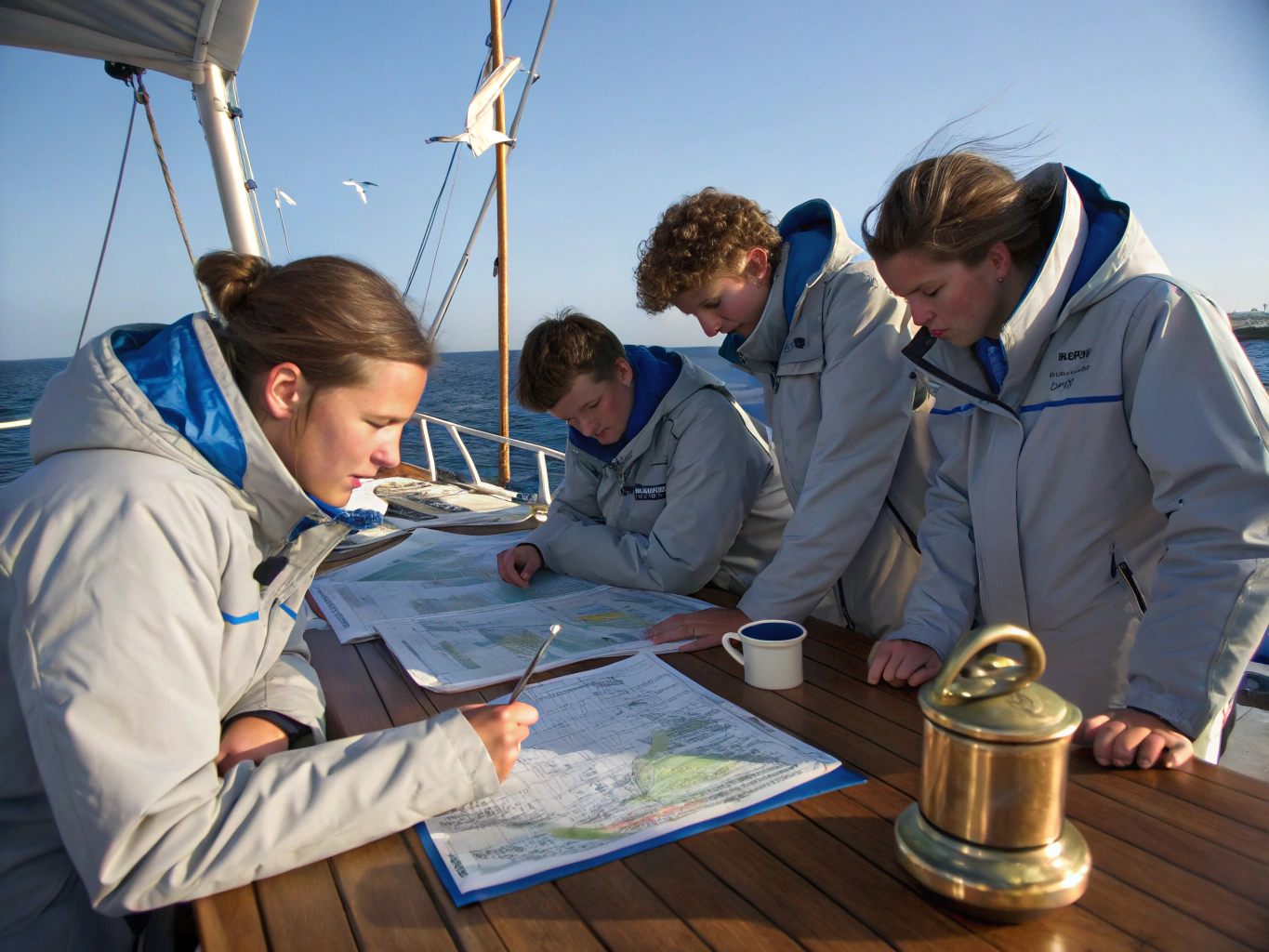
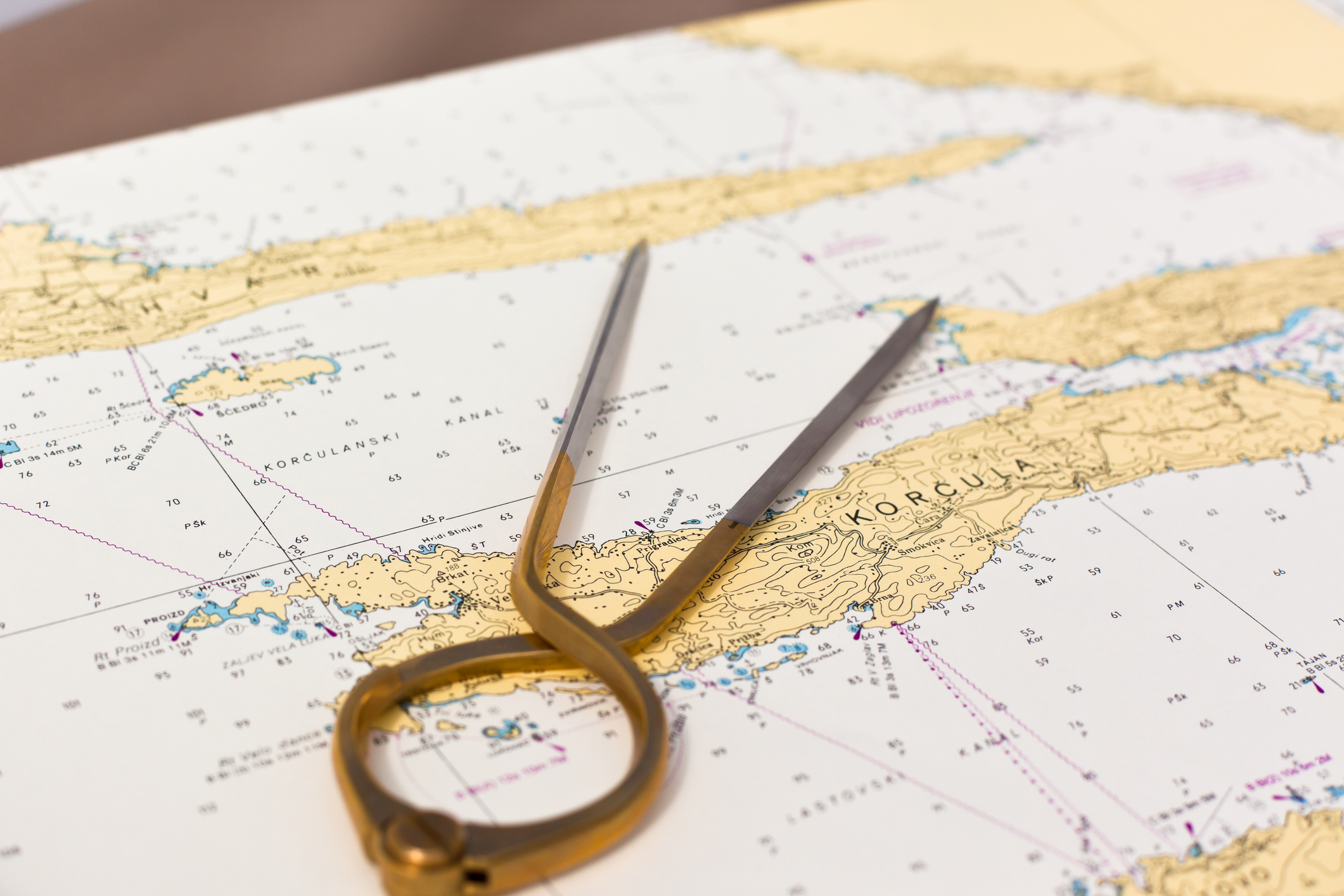
Sailing is not the goal, but the setting that makes team dynamics visible, tangible, and actionable. A professional skipper and executive coach on board, two to three days at sea, and conditions that require people to genuinely rely on each other.
Start a ConversationMost team development formats operate inside the same environment that created the problem. Sailing removes that context entirely. On board, people cannot operate in silos. The boat moves because they work together, and stops when they do not. This experience is designed to strengthen trust, cohesion, and shared responsibility in leadership teams.
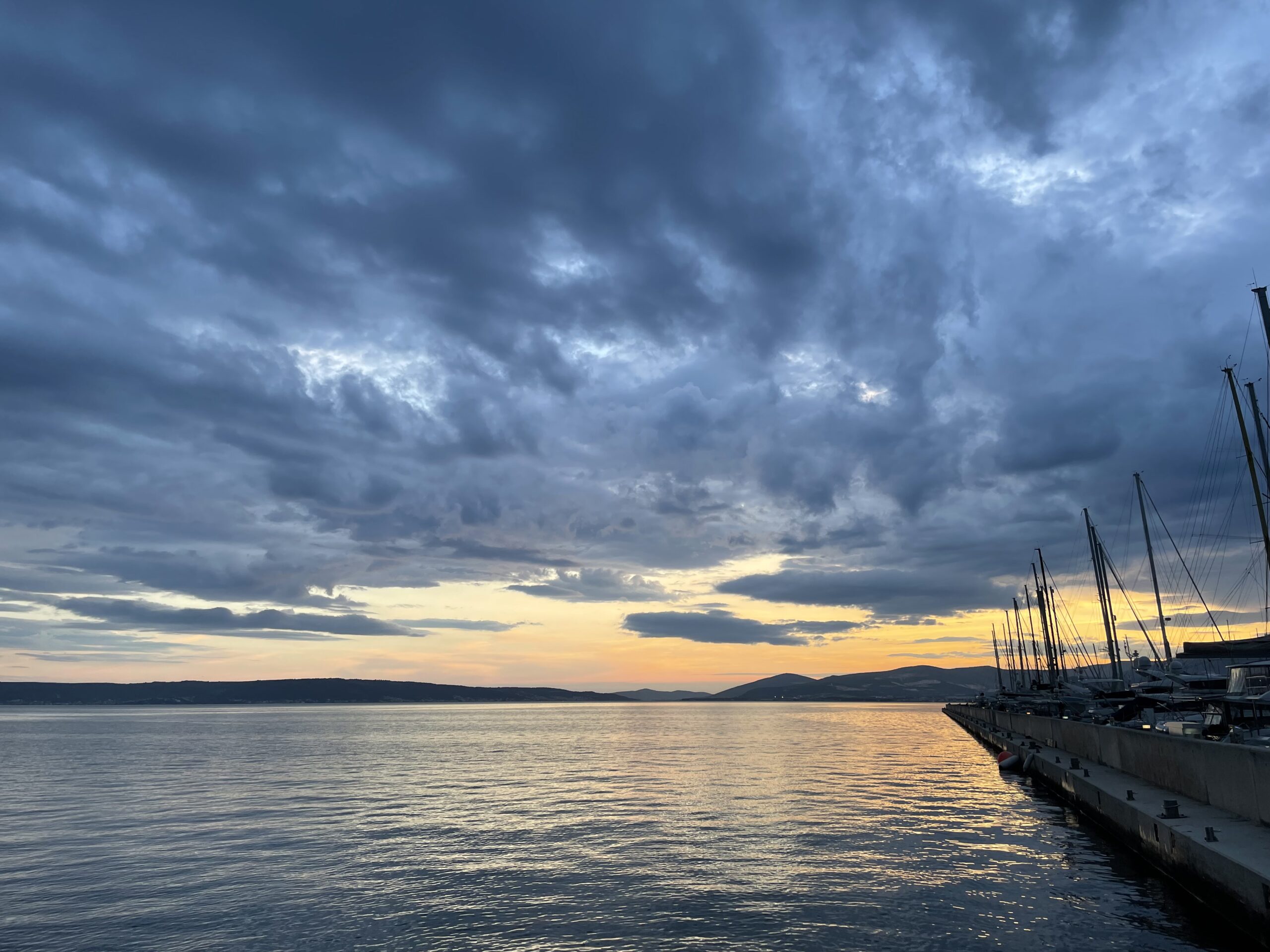
Preparing the boat, leaving the marina, navigating, and arriving at a destination require coordination, trust, and shared attention from everyone on board. There is no observer role. The boat moves because people work together.
Under sail, adjusting sails, tacking, or picking up a mooring buoy are moments where timing, trust, and clear communication matter. Decisions become visible. The quality of how people handle uncertainty together shows up immediately, without abstraction.
Away from the workplace, titles and habits fade. Time spent sailing, cooking, swimming, or simply being together creates space for people to connect as individuals rather than roles, and for conversations to happen that would not happen in the office.
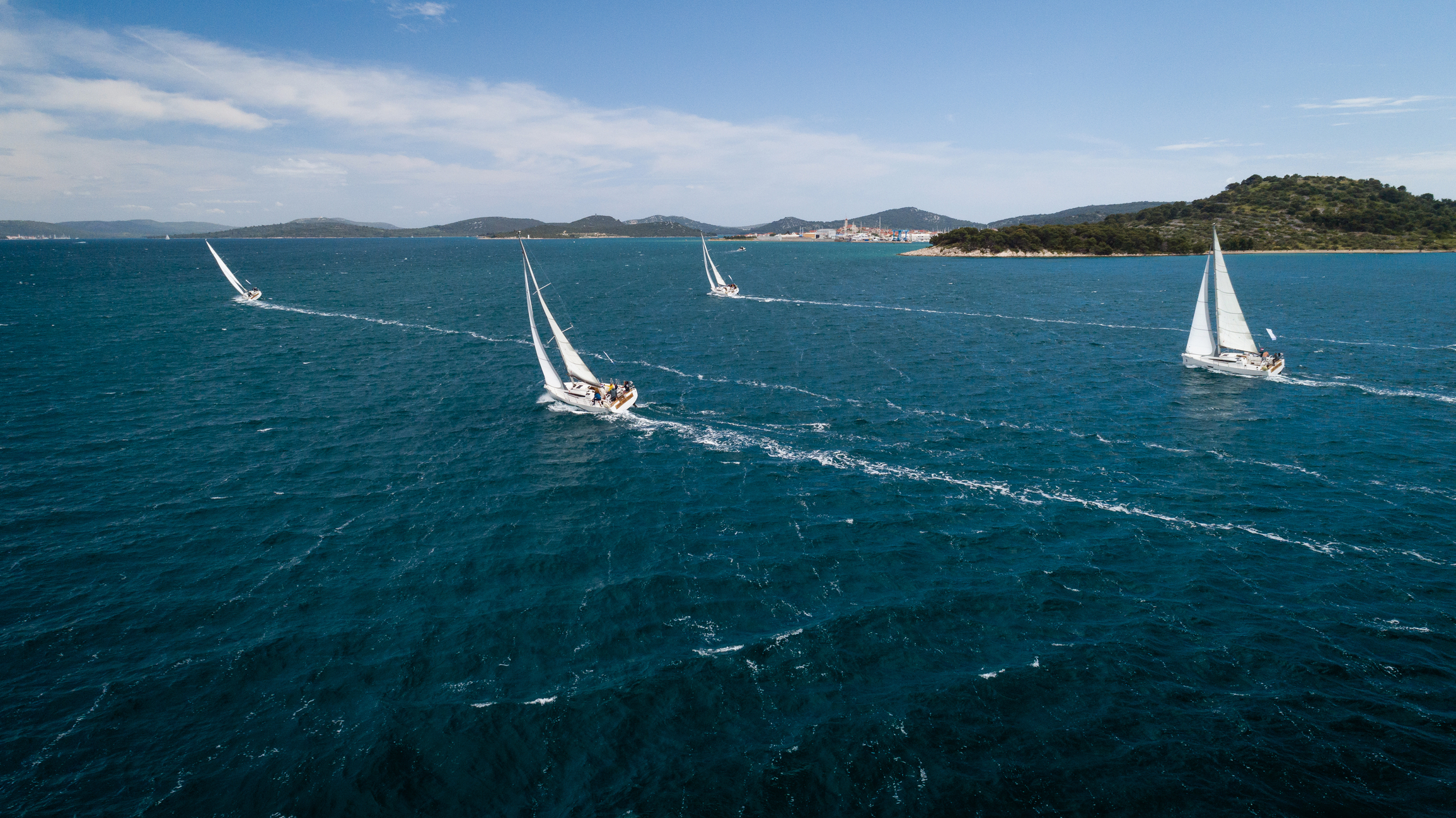
Every Sailvoy corporate sailing experience follows a clear but flexible structure designed to balance sailing, shared responsibility, and time to simply be together. There is no fixed agenda and no pressure to achieve a predefined outcome. The structure exists to create clarity and shared ownership, not to control behaviour.
Each program is adapted to the group. Some teams enjoy longer passages and a stronger sailing focus; others prefer shorter legs with more time for discussion or simply being together. What remains constant is the balance: enough structure to feel intentional, and enough openness for the experience to unfold naturally.
Assessing weather and sea conditions, preparing meals, filling water tanks, organising lines. Practical tasks that naturally require coordination and shared attention before the experience has formally begun.
Navigating toward a destination, adjusting sails, and responding to changing conditions bring the group into immediate collaboration. How people communicate and coordinate under sail becomes visible without effort.
Docking, anchoring in a bay, or picking up a mooring buoy are moments where calm cooperation matters most. Even small unplanned situations become shared problem-solving moments rather than interruptions.
Once settled, the pace slows. Time at anchor, swimming, eating together, or spending time ashore creates space for conversations to continue without the pressure of an agenda. This is often where the most important exchanges happen.
Groups seeking competitive formats, tightly scripted workshops, or large-scale events with fixed deliverables. This experience works best when teams are willing to be present, engage honestly, and allow insight to emerge rather than be engineered.
This experience is designed for small to mid-sized leadership groups who are open to stepping outside familiar structures. It works best for teams who need space to reconnect beyond day-to-day roles, and who benefit from slowing conversations down rather than accelerating them.
Carrying the weight of decisions, growth, or unresolved strain. Time away from the organisation allows roles to soften and difficult topics to be approached with more honesty.
Where alignment exists on paper but trust or openness has eroded over time. Being together outside the workplace allows leaders to reconnect as people rather than positions.
Moving through growth, reorganisation, or increasing complexity. Shared responsibility and time together help rebuild a genuine sense of being in this together.
Where long-term collaboration needs more than formal meetings. Sharing responsibility outside the commercial setting allows relationships to humanise and mutual respect to deepen.
This creates the conditions for a different quality of interaction once teams return to their usual environment. Conversations can become more direct and less guarded, misunderstandings easier to revisit, and past tensions less fixed.
What participants carry back is not a set of techniques but a renewed sense of how they relate to each other, and a shared reference point that the group can return to. The experience typically spans two to three days, allowing enough time for initial impressions to settle and deeper patterns to surface.
Multiple yachts can sail together, creating opportunities for both independent team dynamics and collective reflection across groups.
The calm, measured pace of sailing in the Mediterranean provides the ideal backdrop for meaningful, lasting insight, far removed from the noise and urgency of typical corporate settings.
Different teams arrive at different points. What follows are the situations where time at sea most often creates conditions for relationships to reset.
Alignment on paper but openness or mutual understanding has worn thin. Time together outside the workplace reconnects people before the gap widens further.
Carrying unresolved strain or the weight of difficult decisions. Distance from the organisation gives difficult topics room to be approached honestly.
Previous ways of working no longer fully apply. Shared responsibility at sea helps rebuild direction and the sense of mutual trust that transitions tend to erode.
When topics cycle without resolution or historic tensions exist but are rarely addressed directly. A different setting changes what is possible to say.
Wind does not respond to authority and tide does not recognise hierarchy. At sea, the gap between positional power and functional leadership becomes visible — not as theory, but as behaviour under real conditions.
Sailing PhilosophyThere is a moment during a night passage when titles lose their relevance and organisational charts vanish as completely as the coastline. What remains is a small group sharing responsibility for a vessel moving through the dark.