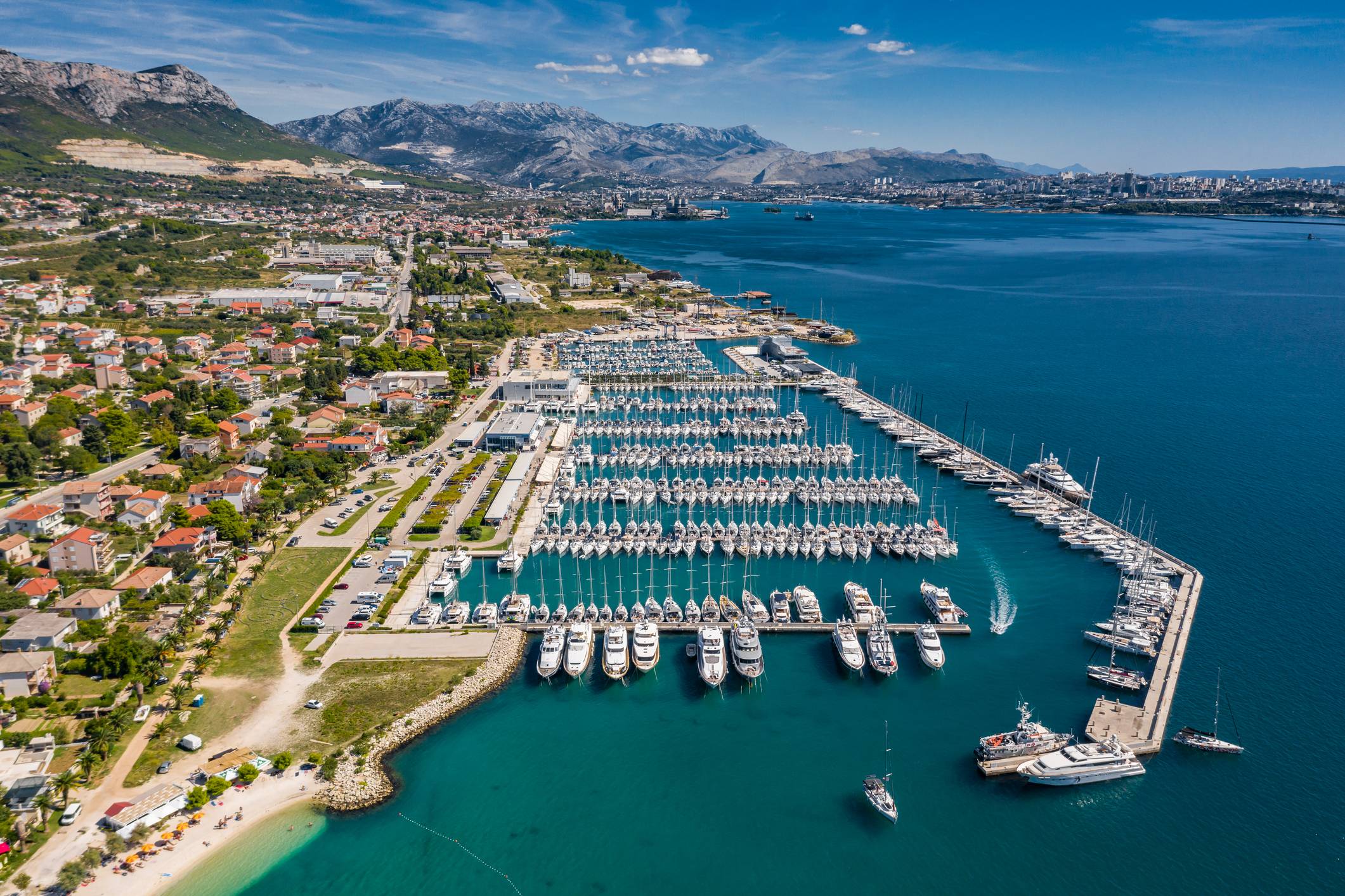
Trogir · Hvar City · Korčula Town · Split, a 7-day itinerary from Marina Kaštela
A route shaped entirely by culture and stone. Each overnight is an architectural arrival into a town that has been receiving sailors for centuries — Trogir, Hvar, Korčula, and Split in a single, coherent week.
Trogir · Korčula · Split
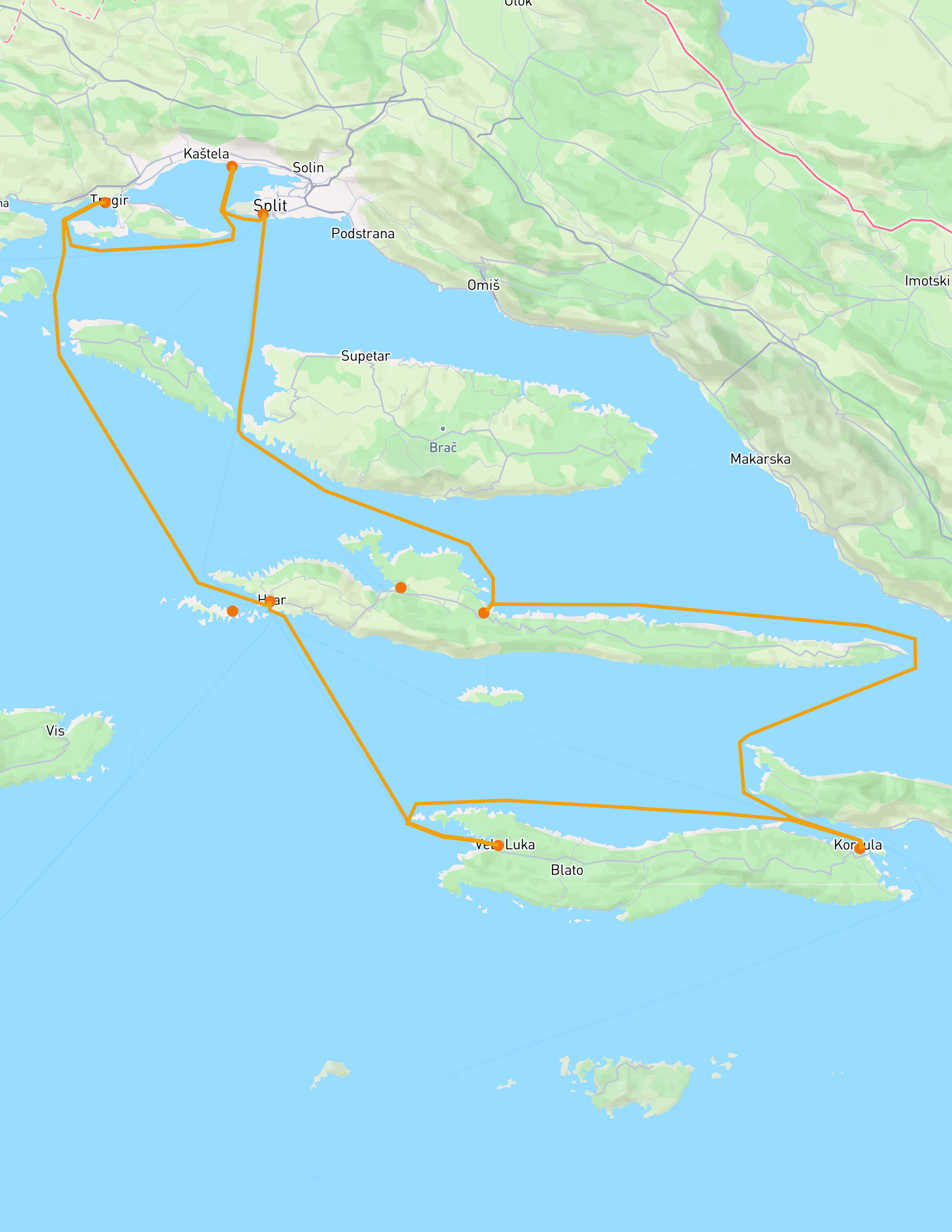
Illustrative sailing route. Distances are indicative and depend on conditions and chosen overnight stops.
This route connects some of the Adriatic's most culturally significant historic harbours. Evenings are not simply overnight stops, but deliberate arrivals into towns shaped by stone, trade, and centuries of maritime life. The sailing between them gives rhythm and space, so each arrival feels earned rather than rushed. The week opens gently with UNESCO-listed Trogir, builds through Hvar City and Korčula Town, and closes with the Roman grandeur of Diocletian's Palace in Split before the short final hop home.
Hvar City is the preferred stop and the more dramatic arrival, but town quay and buoy space is genuinely limited. Early arrival is strongly advised, and in peak season a confirmed berth is not guaranteed. Palmižana at the Pakleni Islands is the elegant fallback: a reservable ACI marina berth surrounded by pine-covered islands and a short water taxi from Hvar town. The experience is different but equally valid, and the route logic remains intact. Choose Hvar City when confident in timing; choose Palmižana when certainty matters more than the riva.
Jelsa is the base-route stop for Day 5: a proper island harbour, lively enough to feel engaging, and an easier departure berth for the Split passage the following morning. Stari Grad is the heritage-rich alternative, a quieter, deeper stop set within a UNESCO-listed agricultural landscape dating to ancient Greek colonisation. The sailing distance from Korčula is slightly longer to Stari Grad, but the reward is a calmer, more contemplative penultimate evening. Both work well as a final Hvar night before the city close of Split.
Each day is described with the suggested sail, the reasoning behind the stop, arrival notes, a flex option, and a brief conditions note. The route is structured around two longer, purposeful passages — Day 2 across to Hvar, and Day 5 from Korčula to northern Hvar — balanced by moderate coastal legs and a gentle final hop. The midpoint of the week is shaped by architecture and stone rather than distance.
A relaxed opening leg across Kaštela Bay. The distance is deliberately short: enough sailing to confirm systems and settle the crew into the rhythm of the week, without the pressure of a demanding first day. Protected waters, familiar coast, and a clear destination just ahead.
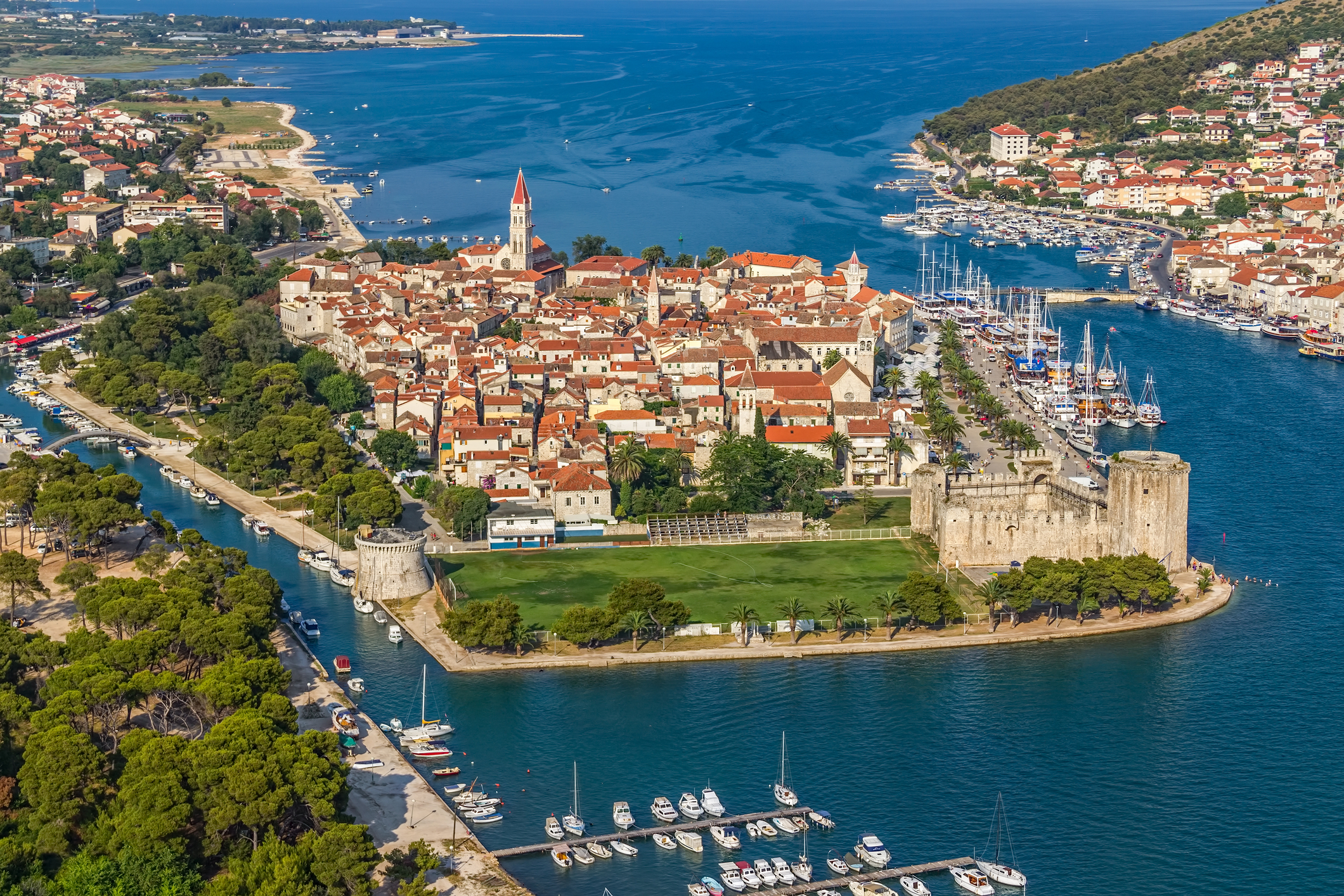
Trogir is UNESCO-listed and immediately sets the cultural tone of the week. Medieval streets, the cathedral of Saint Lawrence, and a harbour that has welcomed sailors continuously since antiquity. Arriving by sea rather than road gives the old town the entrance it deserves.
Berth in the town harbour and walk directly into the old town through the city gate. Dinner inside historic walls, evening light reflecting off stone façades, and the unhurried atmosphere of a town that has not lost its identity to tourism. A soft opening to a week built around exactly this kind of arrival.
If departing early, a short swim stop along the Čiovo coastline adds a pleasant first dip before entering the Trogir channel. The leg is short enough to allow a relaxed start from Kaštela and still arrive in Trogir well before lunch.
Protected crossing within Kaštela Bay. In Bora conditions, gusts can accelerate off the coastal hills but the fetch is short and seas remain manageable. Afternoon Maestral on this heading is typically a comfortable beam reach.
A meaningful crossing toward the island of Hvar. Wider horizons appear as the route moves south of the mainland, the breeze steadies, and the first real sense of open-water distance from Split arrives. This leg gives the week its first proper sailing character.
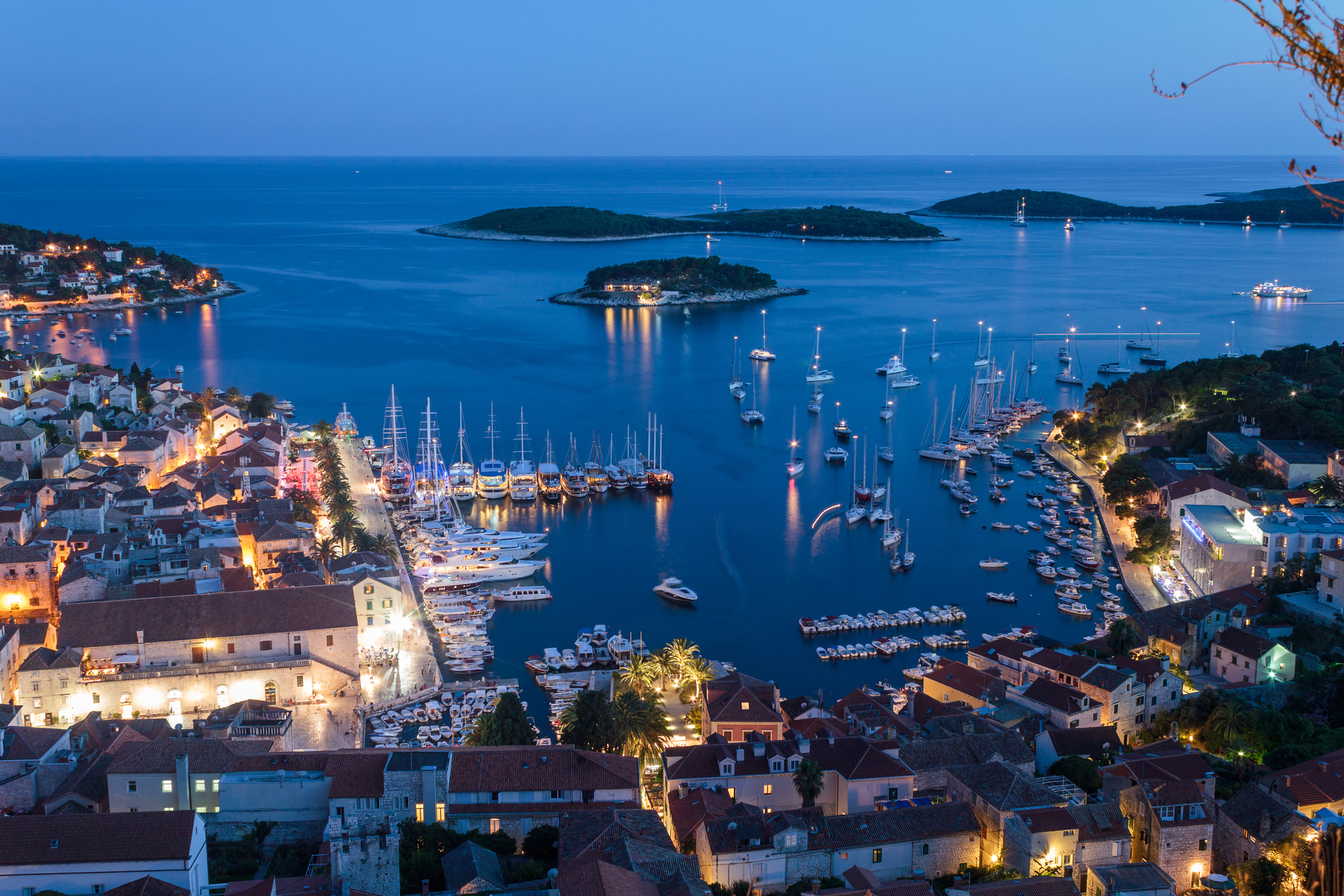
Hvar City offers one of the Adriatic's most dramatic harbour arrivals: the approach beneath the fortress walls, the sweep of the riva, and the layered presence of Venetian architecture above the waterfront. Few harbours on this coast have the same immediate visual impact from the sea.
Evening promenade along the riva, refined restaurants above and below the main square, and the layered atmosphere of a historic island capital that has absorbed centuries of maritime culture without losing its essential character. The fortress walk at dusk rewards the climb.
If Hvar town quay is full on arrival, Palmižana ACI marina in the Pakleni Islands is the practical fallback: a reservable berth surrounded by pine-covered islands, with a short water taxi to Hvar town for dinner. The experience is different, but the evening in Hvar itself remains intact. Palmižana is the right choice when berth certainty matters more than being on the riva.
Town quay and buoy space in Hvar City is limited and fills early, particularly in July and August. An earlier departure from Trogir and an arrival before 14:00 significantly improves berth options. Have the Palmižana fallback planned before leaving.
Moderately exposed depending on wind direction and sea state. The channel south of Brač can produce a lively beam sea in a well-established Maestral. Plan departure with conditions in mind; an early start keeps arrival comfortable.
A balanced stretch along the southern island corridor between Hvar and Korčula. Enough distance to feel the voyage progressing, without the demands of an endurance day. The route moves through a sheltered passage with characteristic Dalmatian scenery on both sides.
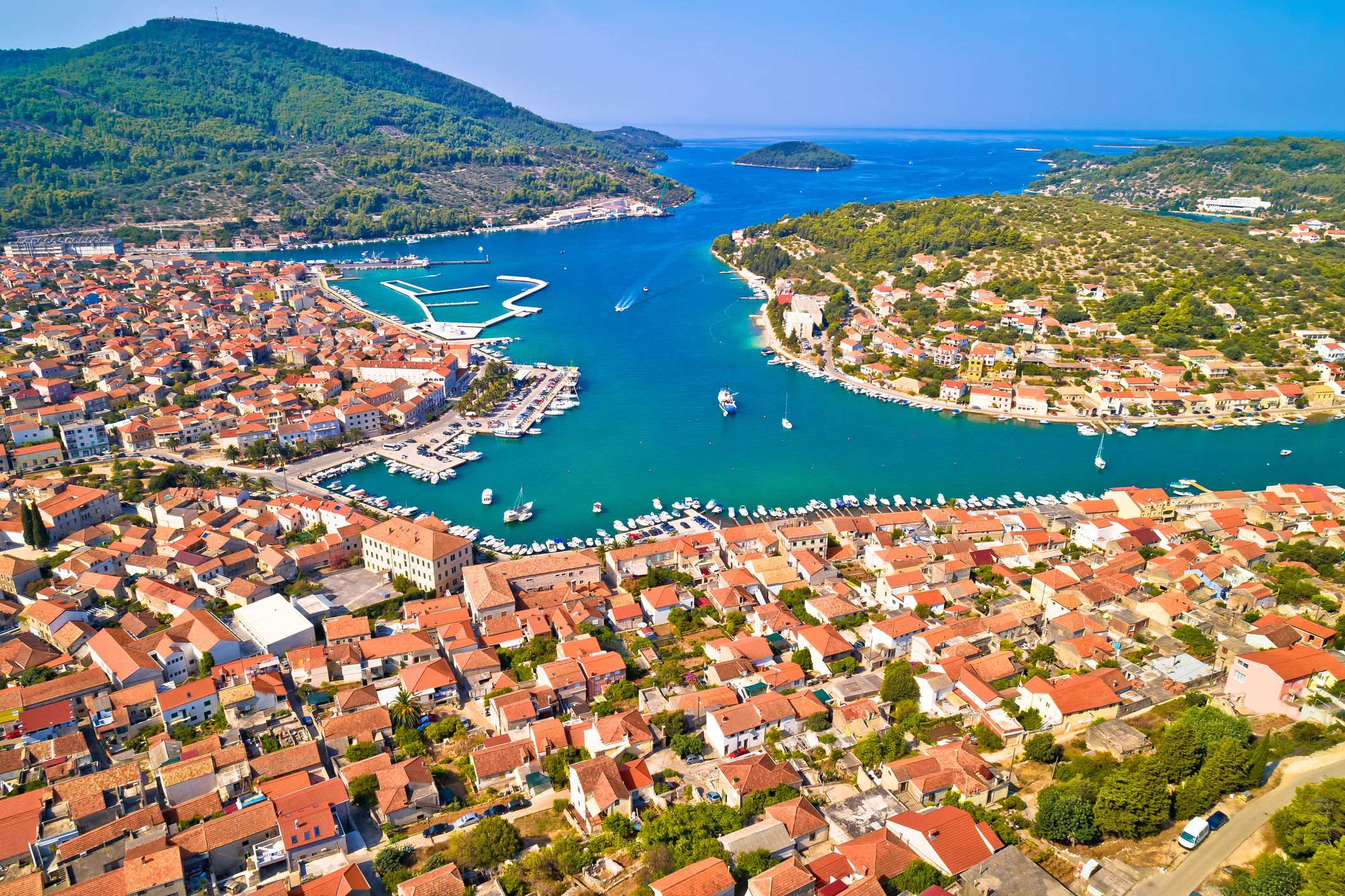
Vela Luka provides calm shelter and a practical staging point before Korčula. It is deliberately a quieter evening, a reset before the architectural highlight that follows. The town has its own understated character: a long, narrow bay, a modest waterfront, and a pace that is entirely removed from the energy of Hvar City.
Protected harbour, relaxed dining on the waterfront, and an early night that sets up Day 4's approach to Korčula in good order. Vela Luka is an honest Dalmatian port town with good provisioning options for the midweek leg.
The leg is short enough to allow a swim stop along Korčula's northern coast en route, or a slow afternoon departure from Hvar with time to walk the old town one final time before casting off. Neither choice adds pressure to the day.
Largely sheltered passage between islands. Local acceleration zones around headlands can produce brief gusts but the overall exposure on this leg is low. Generally a comfortable mid-week day in settled summer weather.
A visually rewarding approach eastward along the Korčula channel. The coast rises on both sides, the island narrows toward its eastern tip, and Korčula Town appears ahead like a stone ship emerging from the sea. The arrival itself is worth taking slowly.
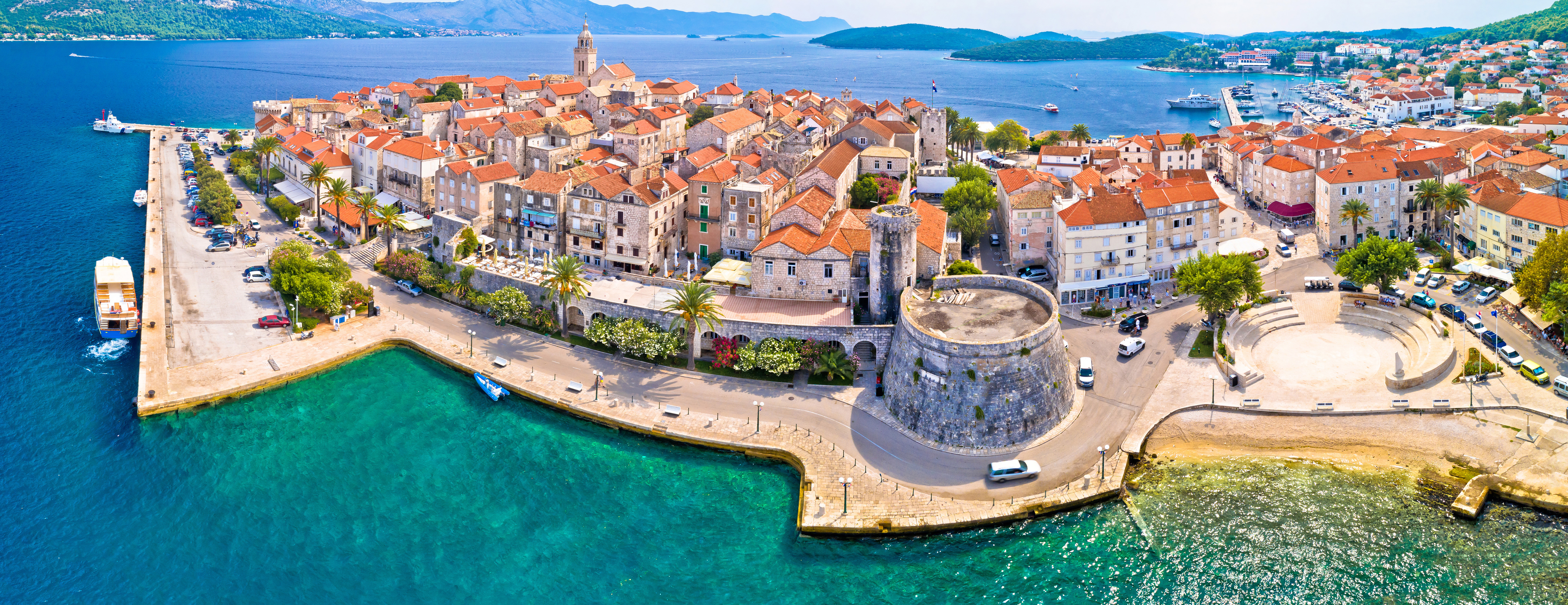
Korčula Town is the architectural centrepiece of this route. Fortified walls descending to the water, marble alleys in a perfect herringbone grid, and a harbour atmosphere that has accumulated layers of history since the medieval Venetian period. Marco Polo, according to local tradition, was born within these walls.
Enter through the old town gate and walk the main street to the cathedral. Evening dining in the old town, refined waterfront bars below the walls, and the particular pleasure of a compact historic city that rewards slow exploration. Korčula at dusk is one of the most atmospheric moments this route offers.
The approach from the west along the northern side of Korčula island offers several pleasant anchorage options for a midday swim before the final miles to town. Arriving in the mid-afternoon gives the crew time to settle aboard before the evening ashore.
Town quay berthing in Korčula requires timing and communication with the harbourmaster, particularly in peak season. The quay fills quickly on summer afternoons. Plan to arrive no later than 15:00 in July and August, and have an alternative anchorage identified in case the quay is full.
The Korčula channel can funnel and accelerate wind, particularly from the northwest. Short chop builds quickly in stronger Maestral but the passage is generally manageable. The final approach into Korčula Town from the west is well sheltered.
The most substantial leg of the week. The route heads north across the channel toward Hvar's northern shore: open water, a wider horizon, and proper offshore sailing conditions on a day that requires careful attention to wind and sea state before departure. This is the leg that earns the closing two days.
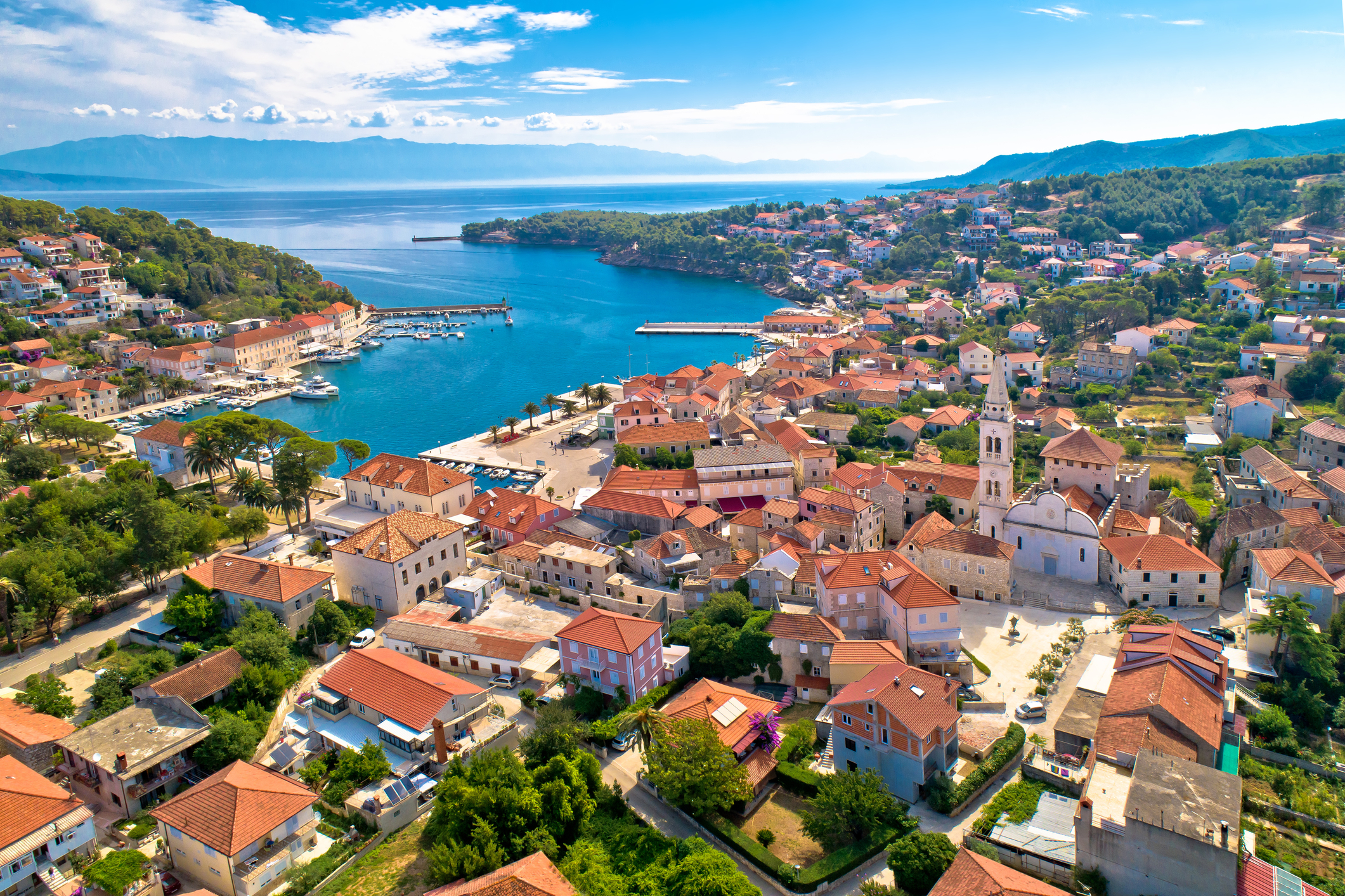
Jelsa offers a balanced island town experience for the penultimate night. Lively enough to feel engaging, harbour mooring generally manageable with proper timing, and a relaxed contrast to the intensity of Korčula the evening before. The town has an honest, lived-in atmosphere that suits a final Hvar night well.
Evening stroll along the harbour promenade, calm mooring, and an authentic island rhythm that carries none of the peak-season pressure of Hvar City. Dinner ashore in a town that is genuinely used by locals as well as visitors. A good final Hvar evening before the city close of Split.
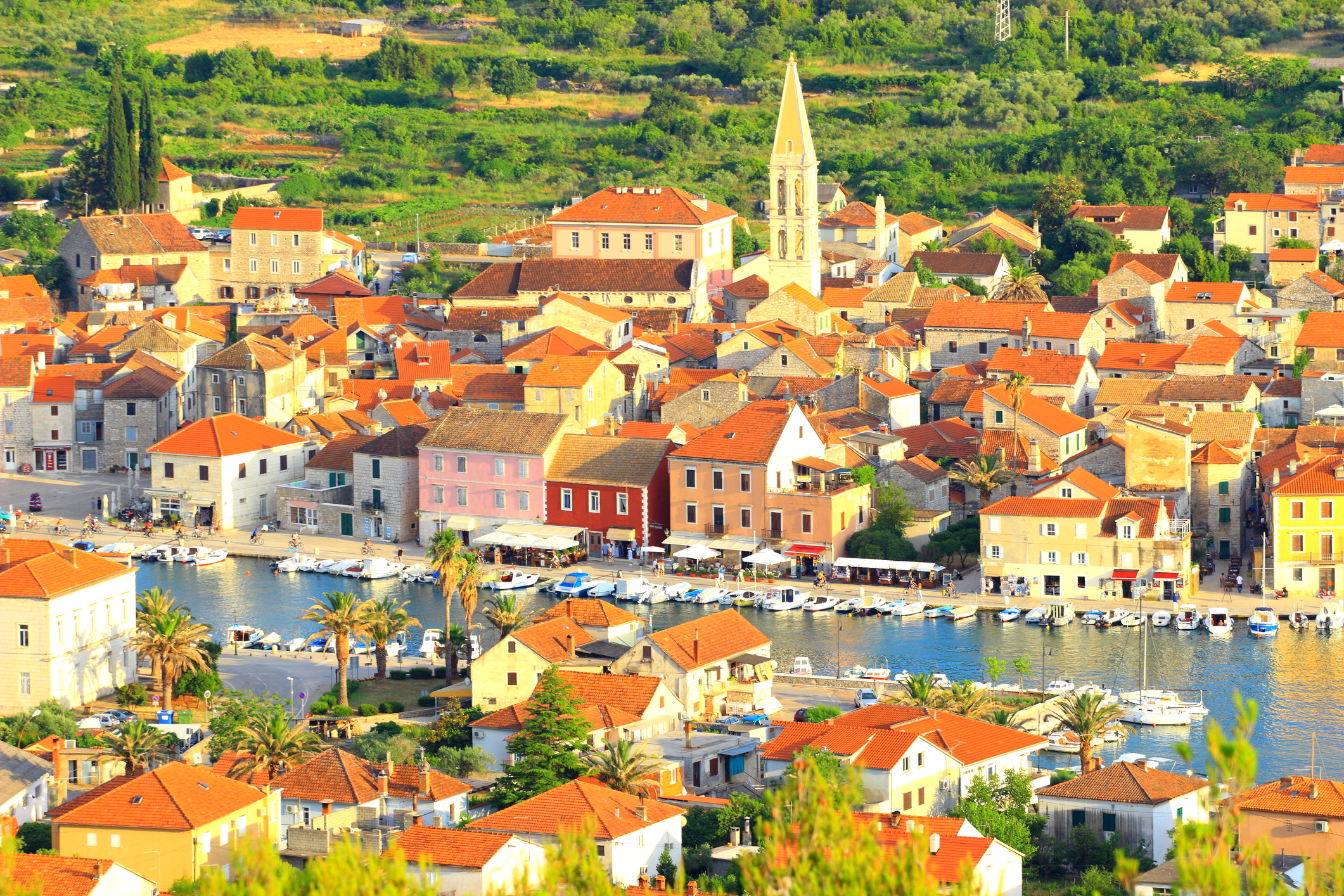
Stari Grad is the heritage alternative to Jelsa: a quieter, deeply historic harbour within a UNESCO-listed ancient landscape. The sailing distance from Korčula is marginally longer, but the reward is a calmer, more contemplative stop. Stari Grad suits crews who prefer atmosphere over amenity; Jelsa suits those who want more restaurant options and an easier departure berth for Day 6.
Exposed in parts. The open-water crossing north of Korčula can produce a substantial sea state in strong Maestral or developing Jugo. Proper weather assessment is important before departure. An early start is advisable; the passage is most comfortable in the morning before the afternoon sea breeze builds.
A moderate coastal passage back toward the mainland, crossing the Brač channel and following the southern Brač coast with optional swim stops in sheltered bays if timing permits. The route arrives at Split ACI Marina, positioned for a strong and fitting close to the week.
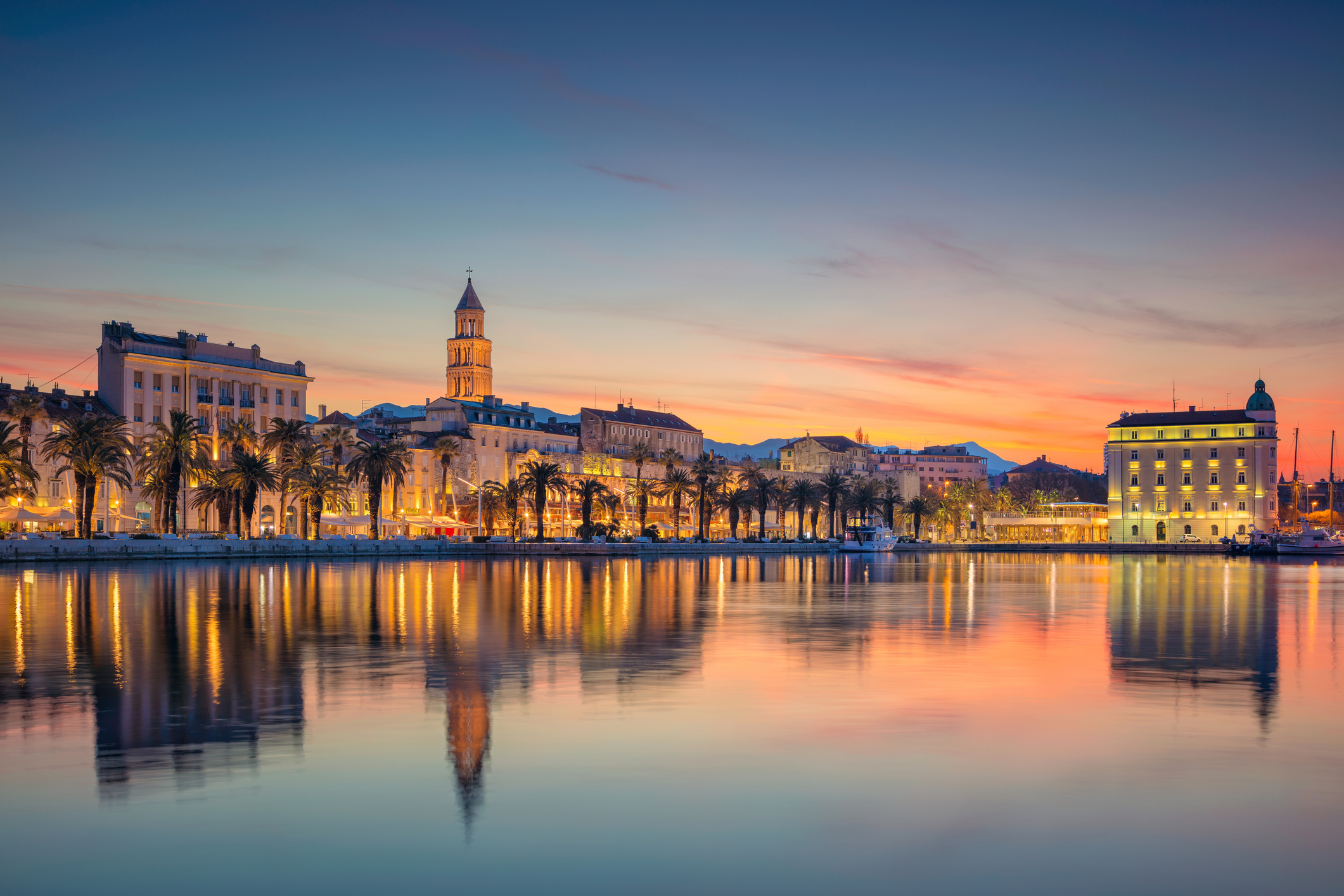
Split provides a deliberately strong closing chapter. Roman palace walls alongside a working harbour, layers of medieval and Habsburg architecture above the waterfront, and city energy offering vivid contrast to the island pace of the preceding days. Diocletian's Palace is not a ruin; it is a living neighbourhood, and dinner within its walls is one of the best final evenings this coast offers.
Berth at ACI Marina Split and walk to the old town in under ten minutes. Enter the palace through the Golden Gate or the Bronze Gate and choose from the restaurants inside the ancient walls. The Peristyle in the evening, lit by warm stone and candlelight, is the right farewell to the week.
If departing Stari Grad on the variant route, the sailing distance to Split is slightly shorter. Either way, the Brač channel bays near Bol or the coves along Brač's southern coast offer a last anchoring stop before the marina. Time arrival to avoid peak early-evening congestion at ACI Split.
The Brač channel can develop short chop in a building afternoon Maestral. An earlier departure from Jelsa keeps the crossing comfortable and preserves the option of a swim stop en route. The approach into Split is well sheltered once inside the bay.
Short and symbolic, a final stretch across the bay to return the yacht to her home berth at Marina Kaštela. The distance is gentle by design, giving the morning a different quality to the rest of the week: unhurried systems handover, a last coffee on deck, and a week that closes cleanly rather than rushing.
The brevity of Day 7 is intentional. After a week of meaningful passages and city arrivals, a five-mile closing hop gives the crew time to absorb the week rather than spend the final morning focused on navigation. The bay crossing from Split to Kaštela is familiar, easy, and a fitting transition from voyage to arrival.
Marina Kaštela offers Spinnaker Restaurant on the waterfront for an elegant farewell dinner, a refined contrast to the week's stone-city evenings, and a proper send-off for the voyage. The marina's facilities make the handover straightforward and unhurried.
A morning swim stop near Čiovo island or along the Brač coastline provides a final anchoring moment before the marina. In settled conditions, the crossing from Split is calm and fast. There is no reason to rush the morning.
Protected crossing within Kaštela Bay. Conditions are typically benign on this final leg. In northerly Bora, the bay provides good shelter. An easy, comfortable close to the week in almost any summer weather.